
“Yellow Face” Echoes African American History—at Shotgun
Reflections
David Henry Hwang Reflects Blackface for White America
by Kheven Lee LaGrone
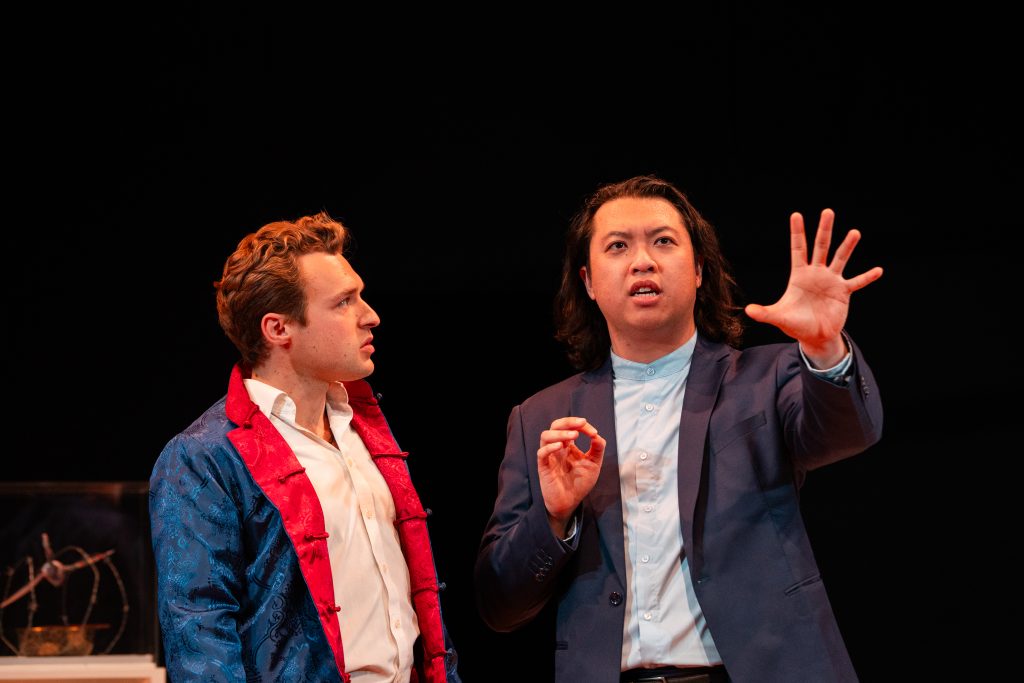
Shotgun Players presented David Henry Hwang’s “Yellow Face,” which won an Obie Award for Playwriting and was nominated for a Pulitzer Prize in 2008). Inspired by real life events, Hwang’s play is well-written, intelligent, and fast moving.
In this semi-autobiographical work, Hwang makes himself the lead as DHH who protests a white actor being cast in the role of an Asian character in the play “Miss Saigon.” This happened when Jonathan Pryce played the role in London and New York. Hwang protested to prevent Pryce from taking the role and using “yellow” face makeup. Exasperated, DHH asks:
“Yellow face? In this day and age? It’s . . . it’s . . . did someone turn back the clock to 1920?
Are we all going to smear shoe polish on our faces, and start singing ‘Mammy’?”
DHH points out that “yellow face” is a variation of blackface or minstrelsy. But blackface did not start in the 1920s. Whites in blackface, often Europeans who had no contact with Black Americans. The whites started minstrelsy in the 1800s, and it became the first American form of theater, morphing later into modern gangster rap. “Yellow face” followed the same racist route, limiting available roles to real Asians.
Blackface had an important role in forming American identity. In the 1800s, European immigrants blackened their face and performed Black stereotypes for the entertainment of their white audiences. In effect, the actors said, “We are not those lazy, ignorant violent Black people. We are good, hard-working white Americans.” It was the most popular form of entertainment; blackface continues to be a popular element in American entertainment. Gangster rap is a minstrel show, and its worldwide impact has not faded.
Ironically, at about the same time as the “Yellow Face” protest (late 80s/early 90s), Black people were protesting gangster rap. When gangster rap first appeared, many Black people were appalled. It depicted Black American culture as violent and misogynistic. Black radio stations banned it. Black people picketed record companies who produced gangster rap. They also picketed stores that sold gangster rap.
Despite the protests, Gangster rap went on to become the most popular music in the United States and abroad. Black people’s fears were soon realized. But this time the audience was not just white America. People all over the world who saw gangster rap thought gangster rap was real. They believed it was a true reflection of a dysfunctional Black America.
Even worse, gangster rap influenced many Black children. The popularity and financial success of ganger rap justified its outlandishly negative behaviors. Many Black youth imitated the gangster rapper. Gangster rap erased much of the progress made during the Black Power Movement.
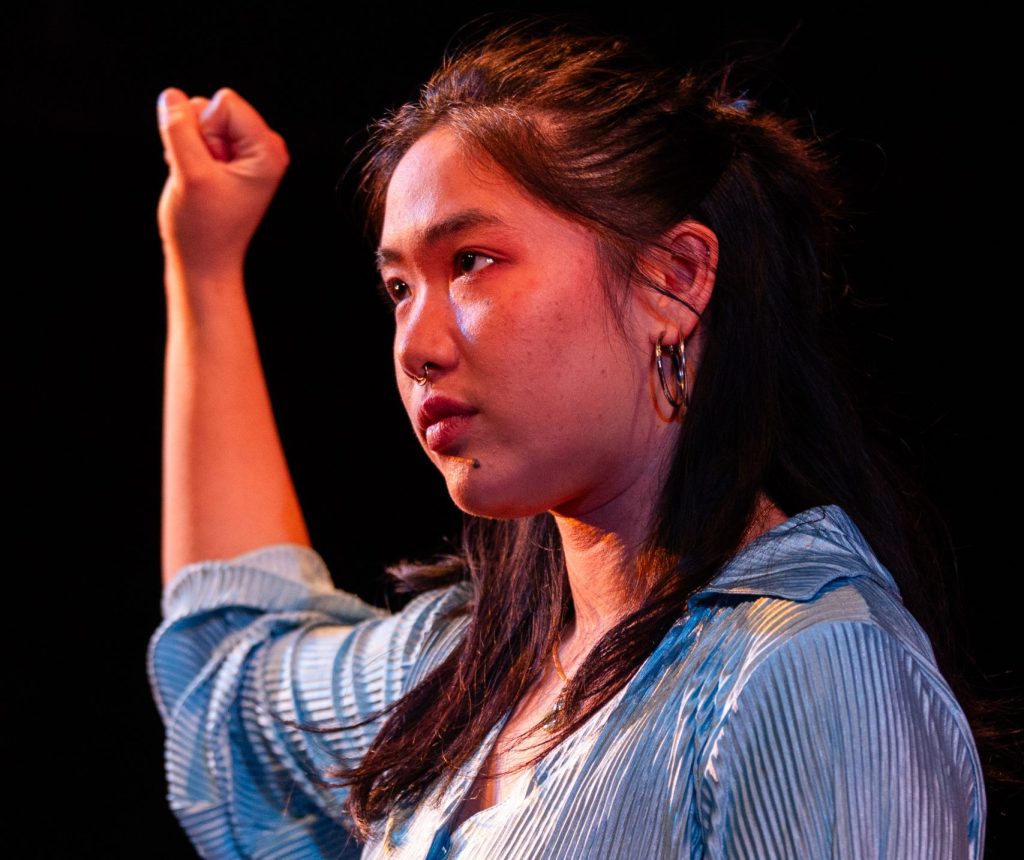
According to “Yellow Face” director Daniel J. Eslick, Hwang’s play is a “personal exploration of race, identity and representation.” As I watched “Yellow Face,” I wondered, “How can any play about American identity not include a single Black character or actor?”
Blacks revolutionized the American identity. The Civil Rights Act led to the Immigration Act and the Fair Housing Act. Thanks to Black Americans, immigrants of color can sue when landlords or employers practice racism against them. The Black Arts Movement revolutionized the way we talk about race in theater—all important benchmarks for the American identity. In fact, while protesting “Miss Saigon,” playwright Hwang argued that only a Black man should play Othello.
America is not white. Black American history remains significant for Asian American history and culture. “Yellow Face” gives a few passing nods to Black history and culture, with cute references to Malcolm X and Rosa Parks. But does it make the connections to Black culture strongly enough?
“Yellow Face” by David Henry Hwang, directed by Daniel J. Eslick, scenic design by Clint Sumalpong, costumes by Nolan Miranda, sound by Michael Kelly, lighting by Spense Matubang, props by Micaela Kieko Sinclair, at Shotgun Players, Berkeley, California. Info: shotgunplayers.org – to June 14, 2025.
Cast: Joseph Alvarado, William Brosnahan, Ben Chau-Chiu, Alan Coyne, Nicole Odell, and Chloe Wong.
Banner photo: Joseph Alvarez, Alan Coyne, William Brosnahan, & Nicole Odell protesting racism. Photos: Robby Sweeny