“The Secret Museum” Seduces with Ancient Art & Exceptional Acting—at The Marsh
Lynne Kaufman Reimagines Dante’s Doomed Lovers for Modern Times
by Mary Lou Herlihy
Do women’s ambitions inhibit their pursuit of awe and sensual pleasures? Can we have it all?
In “The Secret Museum,” Lynne Kaufman blends classical art and literature to pose intriguing new questions. Like Bess Wohl’s “Liberation,” Kaufman’s latest work offers a robust and sensuous dialogue about women’s relationship to their bodies.
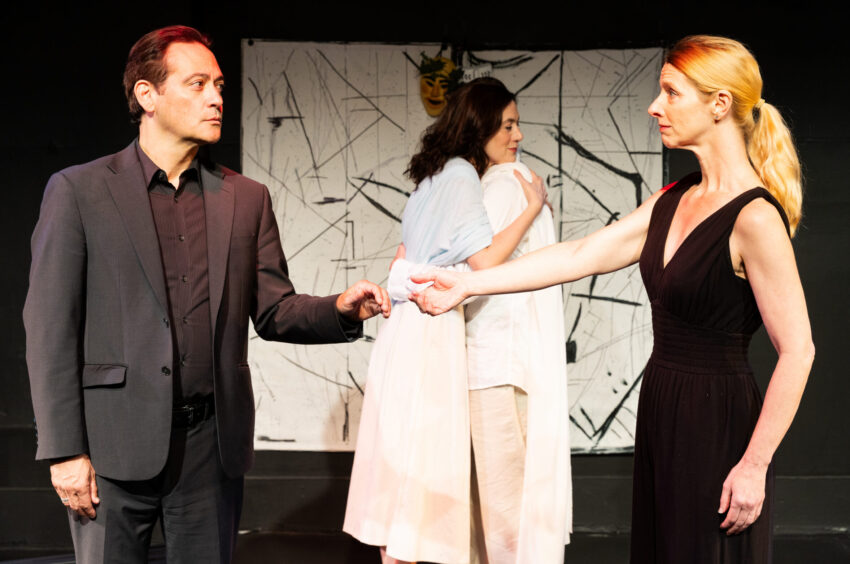
A successful documentary filmmaker, Francesca (played with impressive restraint by Arwen Anderson) places her ambition above all else. With steely determination, she angles to capture the first footage of a recently excavated Pompeian fresco. Her anticipation of the reveal builds slowly like foreplay.
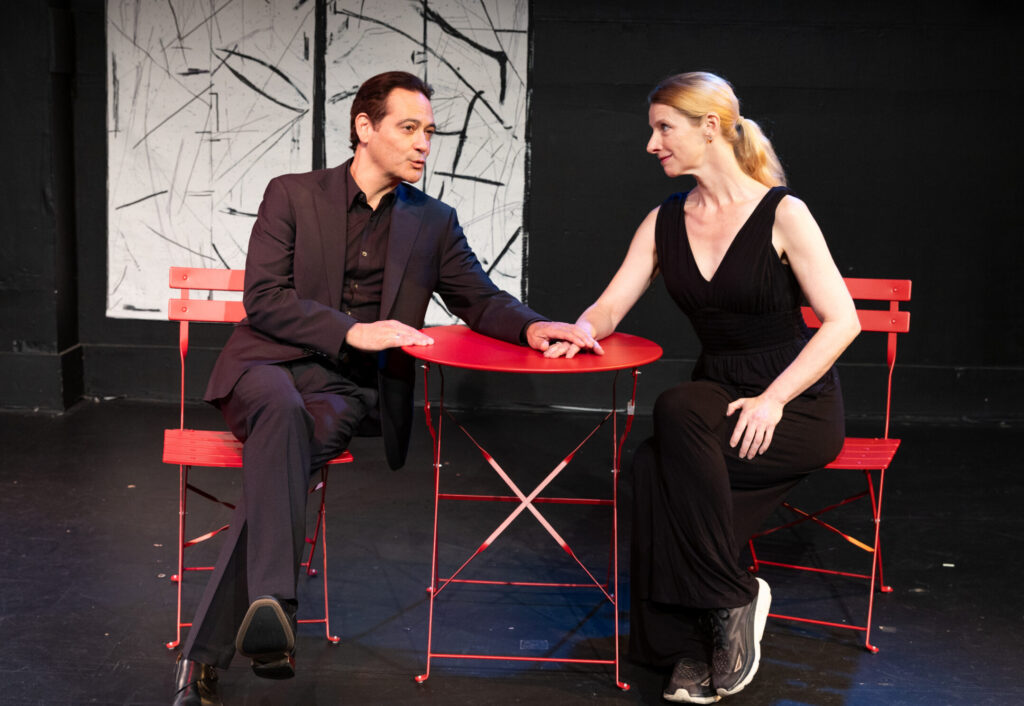
In pursuit of her goal, Francesca loses touch with her ex-lover Paolo (irresistible Johnny Moreno), the museum director in charge of the marvelous, sensual fresco. While the former lovers flirt over espresso in Naples, Francesca pleads with Paolo to reveal the fresco’s mysteries. Seductively, the couple reminisces about their fiery past. Francesca desires a new “no strings attached” fling—but Paolo longs for deeper connection.
Kaufman’s play shifts back to the ancient world, as Dionysus (Lyndsay Kail) and Apollo (Joseph O’Malley) appear silently in masks. Kail and O’Malley enchant us, as ancient flute music animates their gorgeous, evocative dance.
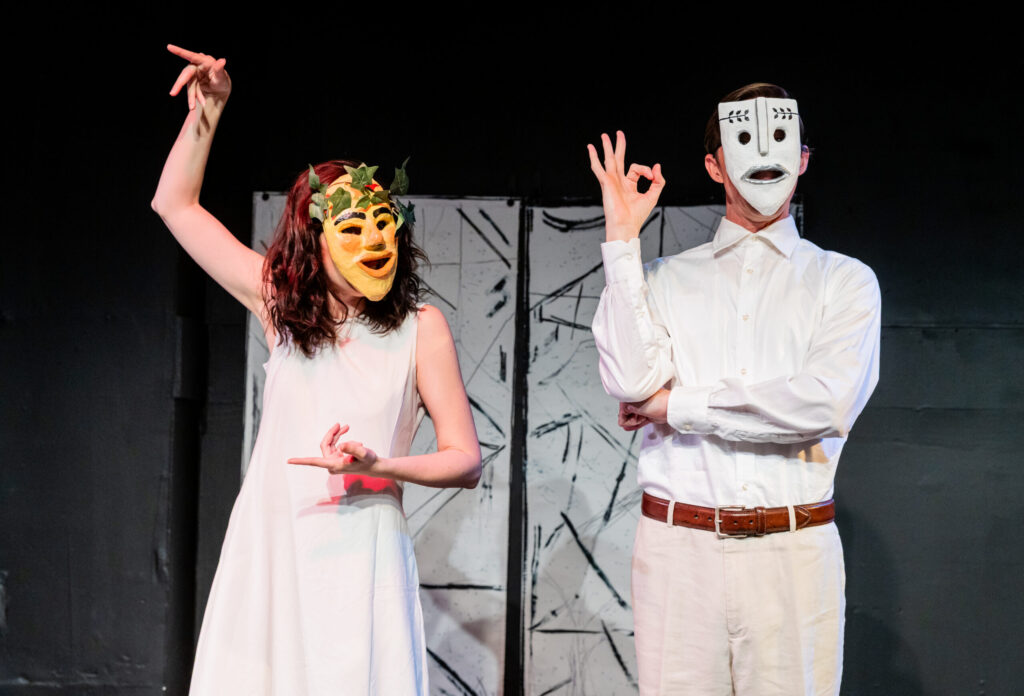
The two Greek gods represent powerfully opposing forces: passion and reason. We wonder if such violent counterparts can ever unite, recalling all too familiar modern-day polarities. The godly figures embody masculine vs. feminine, creator vs. destroyer, and dark vs. light.
Highlighting the loss of these ancient powers, modern characters wear black, the absence of light; while classical figures wear white. All human history appears in their conflict.
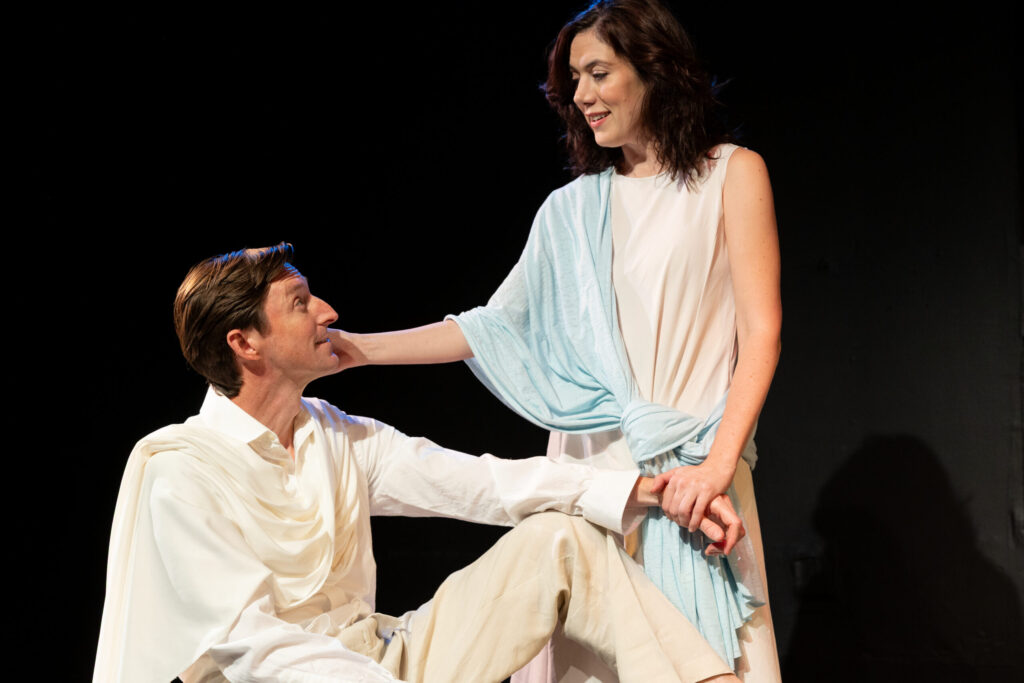
In Victorian time, under the shadow of Vesuvius, a prim English newlywed (Kail), is overwhelmed by sweltering heat. A handsome museum guard (O’Malley) takes pity on her cumbersome clothing. She nearly faints into his arms, and he flushes at her closeness.
Like the men of his time, the guard has access. He holds the keys to a darkened chamber of erotic art where women are forbidden. As a painter, with a desire for inspiration, the Victorian woman begs him to show her the secret gallery. Anticipation of unknown pleasures spark her imagination—and ours.
We watch Francesca respond to art in the forbidden gallery. Surrounded by images of men, mostly with exaggerated erect phalli, she bristles at the lack of female representation. Francesca sees men with men, men with women, men with animals. She struggles with the flagrant double standards that still exist between men and women.
Then, at last, in the darkened intimacy of the Marsh, as Paolo and Francesca and Paolo shine their flashlights on us, we become transcendent treasures in the secret museum.
With the force of a volcanic eruption, the dynamic power of Art, and the thrill of rediscovering sensual pleasures, Kaufman magically unites past, present, and future.
“The Secret Museum” delivers a beautiful and sensual feast of images and ideas that energize debate long after leaving the theater.
“The Secret Museum” by Lynne Kaufman, directed by Warren David Keith, at The Marsh, San Francisco.
Info: themarsh.org – to November 22, 2026.
Cast: Arwen Anderson, Johnny Moreno, Lyndsy Kail, and Joseph O’Malley.
Banner Photo: Johnny Moreno, Lyndsy Kail, Joseph O’Malley, Arwen Anderson. Photos: Cynthia Smalley